Traveling Exhibition Available
2025-2028
Museum Tour Management
LANDAU TRAVELING EXHIBITIONS
-View as Webpage-
Including Paintings, Sculpture, Works on Paper & Photographs by:
Peggy Bacon
George Bellows
Lynda Benglis
Ross Bleckner
Alexander Brook
James Brooks
Rudy Burckhardt
Howard Russell Butler
Henri Cartier-Bresson
John Chamberlain
Chuck Close
Stuart Davis
Elaine de Kooning
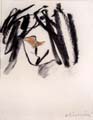
Willem de Kooning
Gaines Ruger Donoho
Max Ernst
Audrey Flack
Jane Freilicher
Adolph Gottlieb
George Grosz
|
Beatrice Grover
Robert Gwathmey
Childe Hassam
Arthur Turnbill Hill
Jasper Johns
William King
Ibram Lassaw
Michael Lekakis
Roy Lichtenstein
Donald Lipski
Conrad Marca-Relli
Thomas Moran
Robert Motherwell
Hans Namuth
Francis Newton
Alfonso Ossorio
Henry Havelock Pierce
Jackson Pollock
Fairfield Porter
Abraham Rattner |
Robert Rauschenberg
John Reed
Larry Rivers
James Rosenquist
David Salle
Miriam Schapiro
Alan Shields
Moses Soyer
Raphael Soyer
Saul Steinberg
Hedda Stern
Strong-Cuevas
Donald Sultan
Andy Warhol
Lemuel Maynard Wiles
Jane Wilson
Robert Rahway Zakanitch
Joe Zucker
|
|
_______________________________________________________________________________________
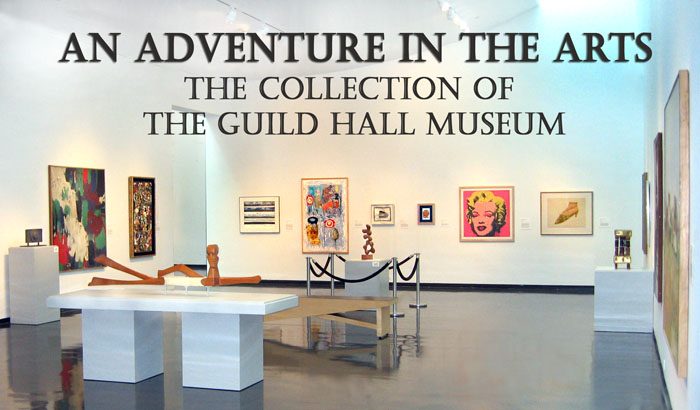
AN ADVENTURE IN THE ARTS
The Permanent Collection of the Guild Hall Museum,
East Hampton, New York
|
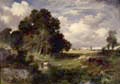
Thomas Moran |
|
Larry Rivers
|
|
John Chamberlain |
|
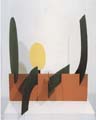
Adolph Gottlieb
|
|
Willem de Kooning |
|
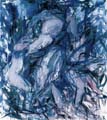
Elaine de Kooning |
|
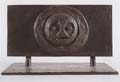
Max Ernst |
|
Lee Krasner |
|
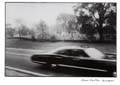
Henri Cartier-Bresson |
|
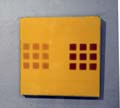
Donald Sultan |
|
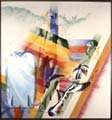
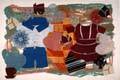
Miriam Schapiro |
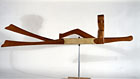 |
William King |
|

Installation Images - Exhibition Info
Schedule - List of Works - Images of Works
Established
in 1931, Guild Hall is the primary cultural center on the Eastern End
of Long Island. The East End of Long Island is a unique region that has
attracted many diversely talented people such as artists, writers,
musicians, actors, and directors over the years. They search for and
find inspiration in the natural beauty of the landscape, the
magnificent light and the endless beaches. Guild Hall provided East
Hampton with an art gallery, a theater and meeting place - the cultural
center in the center of culture.
Long Island, with close
proximity to New York City, became a popular tourist destination with
the onset of the Long Island Railroad in the late 19th century. The L.
I.R.R. was very active in marketing the charms of the region by
distributing thousands of brochures and leaflets. In the 1870s, Hudson
River School painters portrayed the white sand beaches of eastern Long
Island. Winslow Homer came to visit in 1872 and in 1878, a group of New
York artists known as the Tile Club traveled to the East End and
visited several of its small villages including East Hampton. Thomas
Moran and his family settled permanently in 1884. His home and studio
became the center of life for artists who visited the village.
In the teens, twenties and
thirties many artists including Guy Pene du Bois and George Bellows,
visited the area. Later after WWII, the Surrealists aided by artist and
philanthropist Gerald Murphy were welcomed guests. They were followed
by the Abstract Expressionist artists Jackson Pollock, Lee Krasner, and
Willem de Kooning, Pop artists Roy Lichtenstein, James Rosenquist and
Andy Warhol, Photo Realists Audrey Flack and Chuck Close, 80's and 90's
Neo-expressionist artists Eric Fischl, David Salle and Julian Schnabel
as well as many contemporary artists today such as Ross Bleckner,
Donald Sultan and April Gornik. These artist-residents continue to make
the East End the country's foremost art colony.
In 1931, when Mrs. Lorenzo
E. Woodhouse dedicated Guild Hall as a cultural center for the
community, The New York Times noted that Howard Russell Butler's
portrait of Thomas Moran, on exhibit in the galleries, was not a loan,
but an acquisition. From this beginning over 73 years ago, the holdings
have grown significantly in size and scope. In the early 1960's, the
collection began to focus on the artists who have lived and worked in
the region, including some of the country's most celebrated painters,
sculptors, photographers and graphic artists. It was not until 1970
when the Dewey Wing, with climate-controlled art storage and processing
facilities, was added, that collecting started in earnest.
In 1973 the museum received
the distinction of being accredited by the American Association of
Museums. Today, the holdings of 19th, 20th and 21st century art number
some 1900 objects which include paintings, sculpture, prints,
watercolors, photographs and drawings by internationally renowned
artists. The museum continues to acquire works by donation and
acquisition.
AN ADVENTURE IN THE ARTS
includes 72 works and is available for scheduling through 2027.
Installation Images - Exhibition Info
Schedule - List of Works - Images of Works |
|
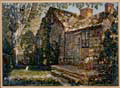 |
Childe Hassam |
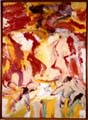 |
Willem de Kooning |
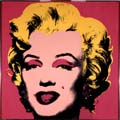 |
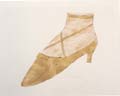
Andy Warhol |
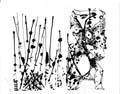 |
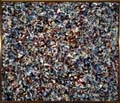
Jackson Pollock |
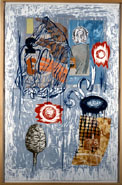 |
David Salle
|
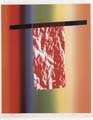 |
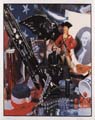
James Rosenquist |
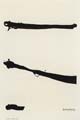 |
Robert Motherwell
|
 |
|
|
|
|
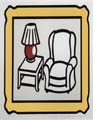
Roy Lichtenstein |
|
|
|
___________________________________________________________________________________
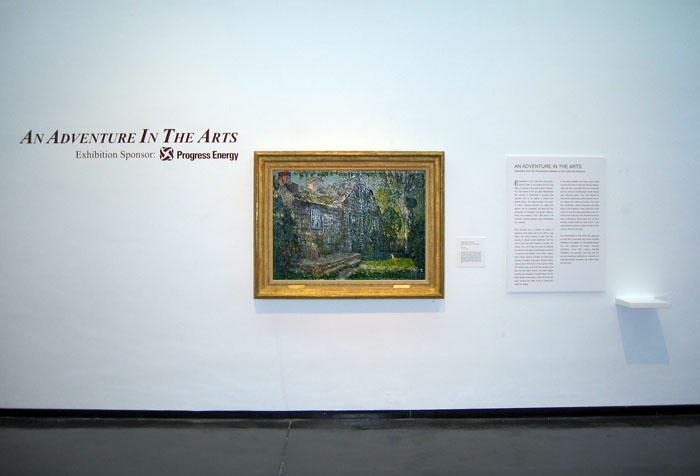
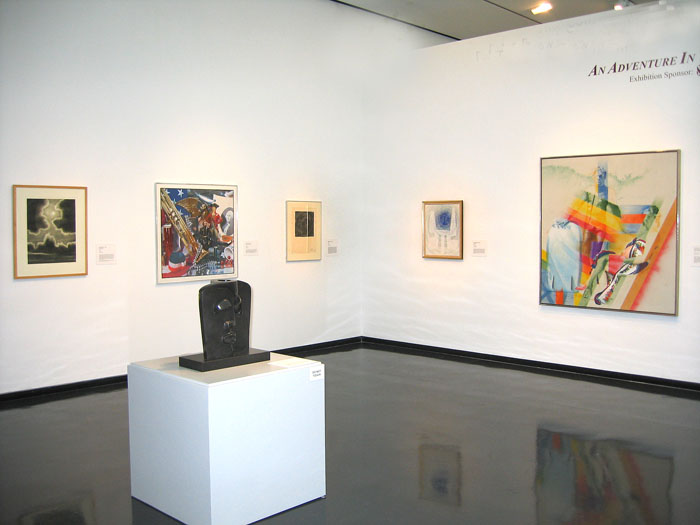
AN ADVENTURE IN THE ARTS
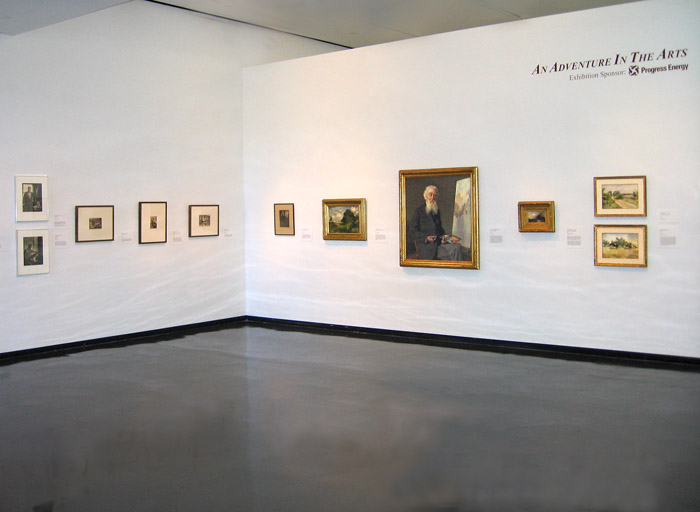
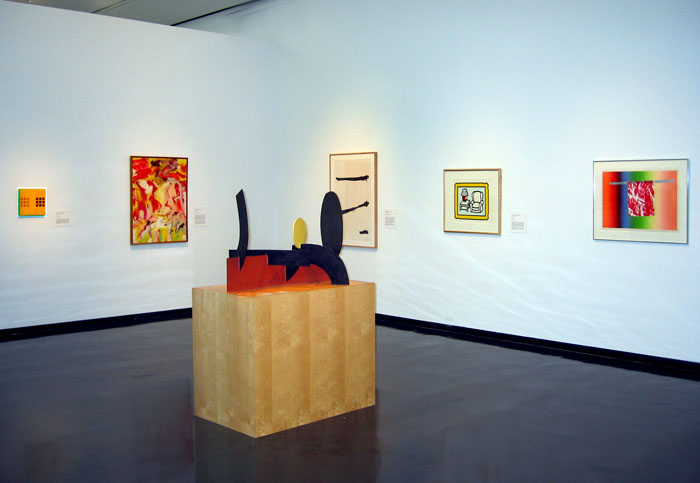
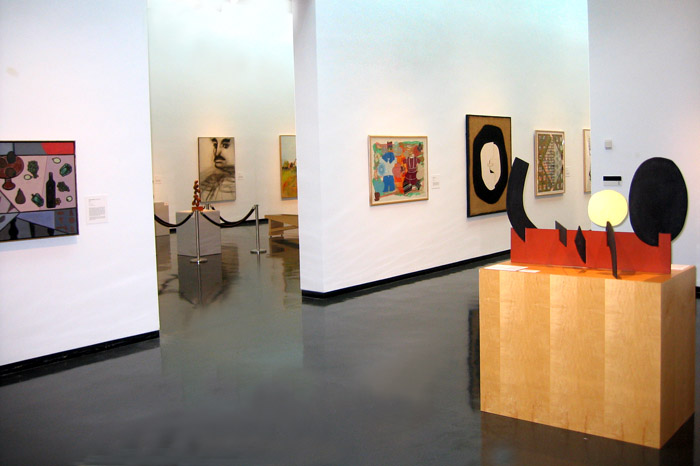
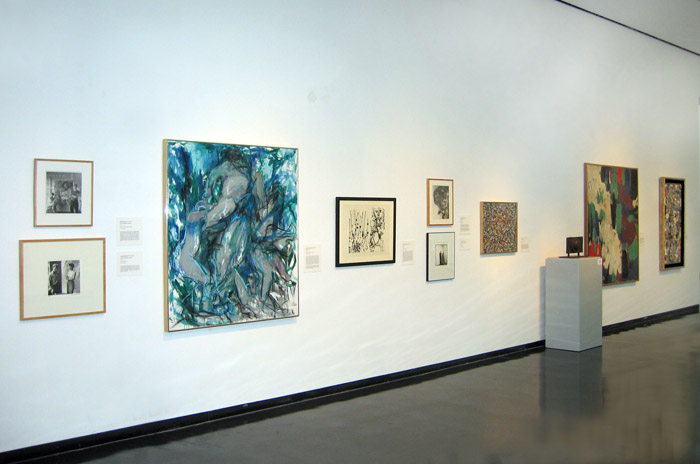
INSTALLATION VIEWS
Gulf Coast Museum of Art, Largo, FL
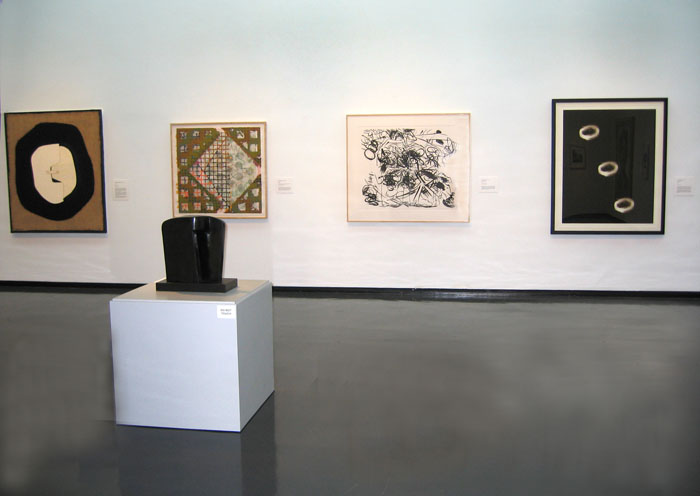
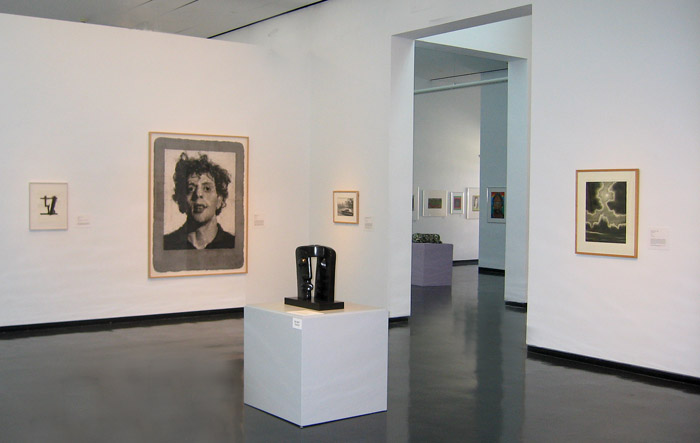
AN ADVENTURE IN THE ARTS
Exhibition Info
Total number of works:
72 works - paintings, sculpture.
works on paper,
prints, mixed-media
Text panel copy with credits and introduction
wall label copy with biographical information about each artist
Space Requirements:
2,500 - 3,500 square feet approx
Loan Fee:
Price on request
Dates Available:
May 2024 - December 2026
Shipping:
Exhibitor responsible
Insurance:
Exhibitor responsible
Contact:
LANDAU TRAVELING EXHIBITIONS
Tel: 310-397-3098
Email: info@a-r-t.com
Web site: www.a-r-t.com/guildhall
|
AN ADVENTURE IN THE ARTS
Exhibition Schedule
as of 06/30/25
2007
February 9 - April 30
Gulf Coast Museum of Art
Largo, FL
2008
March 1 - May 31
LSU Art Museum
Baton Rouge, LA
June
15 - October 1
Visual Arts Center
Panama
City, FL
October
18 - January
15, 2009
South Bend
Regional Museum of Art
South Bend, IN
2009
February
5 - May 3
Turtle Bay Exploration Center
Redding, CA
May 21 - August 2
Sangre de Cristo Art Center
Pueblo, CO
August 15 - October 31
Southeast Missouri Regional Museum
Southeast Missouri State University
Cape Girardeau, MO
Nov 15, 2009 - January 15, 2010
Lakeview Museum of Arts & Sciences
Peoria, IL
2010
February 5 - April 18, 2010
Mobile Museum of Art
Mobile, AL
2012
February 17 - May 20
Museum of the Rockies, MSU
Bozeman, MT
2013
February 5 - March 31
Norton Museum
Shreveport, LA
April 12 - June 15
Alexandria Museum of Art
Alexandria, LA
July 15 - September 22
Farmington Museum
Farmington, NM
2014
August 15 - October 15
Pensecola Museum of Art
Pensecola, FL
2015
August 28 - October 24
Lake Charles City Hall
Lake Charles, LA
Reserved
November 20, 2015 - February 21, 2016
Arlington Art Museum
Arlington, TX
2017
January 27 - April 16
Art Museum of South Texas
Corpus Christi, TX
2020
August 29, 2020 – January 3, 2021
Museum of the Shenandoah Valley
Winchester, VA
2022
March 4 - June 19
Biggs Museum of Art
Dover, DE
Washington Pavillion
Sioux Falls, SD
October 1, 2022 - March 5, 2023
2023
Boston Univ Art Gallery
Boston, MA
Oct 1 - Dec 31, 20232
2024
Society of the Four Arts,
Palm Beach, FL
Feb 10 - April 28
November 9 - January 2, 2025
Naples Art Institute
Naples, FL
2025
July - December
OPEN
2026
January 1 - September 7
OPEN
October 10 – January 3, 2027
Mulva Cultural Center
De Pere, WI
2027
OPEN
|
AN ADVENTURE IN THE ARTS
The Permanent Collection of the Guild Hall Museum,
East Hampton, New York
List of Works
|
Exh# |
|
|
|
Date |
|
| 01 |
Peggy |
Bacon |
Lady Artist (Self-portrait of
Peggy Bacon) |
1925 |
Drypoint |
| 02 |
Peggy
|
Bacon |
John Sloan's Lecture |
1918 |
Drypoint |
| 03 |
Peggy |
Bacon |
Model in the Bellows Class |
1918 |
Drypoint |
| 04 |
George |
Bellows |
Cattle |
1899 |
Watercolor |
| 05 |
George |
Bellows |
Road with Barn near Sag Harbor |
1899 |
Watercolor |
| 06 |
Lynda |
Benglis |
Arroyo Skies #3 |
1992 |
Etching and aquatint |
| 07 |
Ross |
Bleckner |
Untitled |
1991 |
Oil on canvas |
| 08 |
Alexander |
Brook |
Hick's Island (Lazy Point, East
Hampton |
1952 c. |
Oil on canvas |
| 09 |
James |
Brooks |
Floxurn |
1955 |
Oil on canvas |
| 10 |
Rudy |
Burckhardt |
Willem and Elaine de Kooning |
1950 |
Gelatin silver print |
| 11 |
Howard Russell
|
Butler |
Portrait of Thomas Moran |
1922 c. |
Oil on canvas |
| 12 |
Henri |
Cartier-Bresson |
East Hampton |
1968 |
Gelatin silver print |
| 13 |
John |
Chamberlain |
The Beach Boys |
1964 |
Masonite and formica, |
| 14 |
Chuck |
Close |
Phil/Manipulated |
1982 |
Handmade paper |
| 15 |
Stuart |
Davis |
Portrait of a Man |
1914 |
Oil on canvas |
| 16 |
Willem |
de Kooning |
Untitled |
1972 c. |
Oil on paper mounted on canvas, |
| 17 |
Willem |
de Kooning |
Untitled (Head of a woman) |
|
Charcoal and pastel on paper |
| 18 |
Elaine |
de Kooning |
Bacchus # 63 |
1982 |
Acrylic and charcoal on canvas |
| 19 |
Gaines Ruger |
Donoho |
Woodhouse Water Garden |
1911 |
Oil on canvas |
| 20 |
Jimmy |
Ernst |
Terrestrial II |
1968 |
Oil on canvas |
| 21 |
Max |
Ernst |
Face |
1948; 1967 68 |
Bronze |
| 22 |
Audrey |
Flack |
Fourth of July Still-Life |
1975 |
Screenprint |
| 23 |
Jane |
Freilicher |
Water Mill Landscape |
1963 |
Oil on canvas |
| 24 |
Arnold |
Genthe |
Childe Hassam |
1935 |
Gelatin silver print |
| 25 |
Arnold |
Genthe |
Francis Newton |
|
Gelatin silver print |
| 26 |
April |
Gornik |
Moon and Sea |
1991 |
Aquatint |
| 27 |
Adolph |
Gottlieb |
Guild Hall is for Everyone |
1970 |
Offset Lithograph |
| 28 |
Adolph |
Gottlieb |
Wall |
1968 |
Painted aluminum |
| 29 |
George |
Grosz |
East Side, New York |
1933 c. |
Watercolor |
| 30 |
Beatrice |
Grover |
Guild Hall in Autumn |
1977 |
Oil and turpentine washes, and
pencil
On X-lite mounted on board |
| 31 |
Robert |
Gwathmey |
Still Life |
1973 |
Oil on canvas |
| 32 |
Childe |
Hassam |
The Guild Hall, East Hampton |
1977 |
Etching |
| 33 |
Childe |
Hassam |
Little Old Cottage, Egypt Lane,
East Hampton |
1917 |
Oil on canvas |
| 34 |
Arthur Turnbull |
Hill |
Town Pond |
1920s c. |
Oil on canvas |
| 35 |
Jasper |
Johns |
Target |
1973 |
Screenprint |
| 36 |
William |
King |
Swimmer |
1974-79 |
Cedar polychrome |
| 37 |
Ibram |
Lassaw |
Caryatids V |
1969 |
Bronze and alloys |
| 38 |
Michael |
Lekakis |
Nereid |
1946 |
Local wild cherry on red pine base |
| 39 |
Roy |
Lichtenstein |
Study for Red Lamp |
1980 |
Screenprint |
| 40 |
Donald |
Lipski |
Powershot |
1997 |
Staple gun mounted on paper |
| 41 |
Conrad |
Marca-Relli |
F-L-76 |
1976 |
Canvas collage |
| 42 |
Thomas |
Moran |
A Midsummer Day, East Hampton,
Long Island |
1903 |
Oil on canvas/board |
| 43 |
Thomas |
Moran |
Approaching Storm, East Hampton |
1878 |
Oil on mahogany panel |
| 44 |
Robert |
Motherwell |
For meyer shapiro |
1973 |
Itaglioi print, lift ground, and
aquatint |
| 45 |
Hans |
Namuth |
Jackson Pollock and Lee Krasner |
1950 |
Gelatin silver print |
| 46 |
Hans |
Namuth |
Elaine and Willem de Kooning |
1953 |
Gelatin silver print, selenium
toned |
| 47 |
Francis |
Newton |
Montauk Bluffs |
1921 |
Oil on canvas |
| 48 |
Alfonso |
Ossorio |
Compatriots |
1966-67 |
Collage, plastic and various
materials on panel |
| 49 |
Henry Havelock |
Pierce |
Portrait of Thomas Moran at his
Easel |
1915 |
Gelatin silver print |
| 50 |
Jackson |
Pollock |
Untitled |
1951 |
lithograph |
| 51 |
Fairfield |
Porter |
The Plane Tree |
1964 |
Oil on canvas |
52
|
Abraham |
Rattner |
Henry Miller |
1940 |
Ink on paper |
| 53 |
Robert |
Rauschenberg |
New York |
1965 |
Screenprint |
| 54 |
John |
Reed |
Jackson Pollock |
1956 |
Gelatin silver print |
| 55 |
Larry |
Rivers |
Summer Pregnancy (Portrait of
Jimmy and Gretchen Johnson), |
1977 |
Acrylic on canvas |
| 56 |
James |
Rosenquest |
Horizontal bar |
1973 |
Color lithograph, silkscreen and
collage |
| 57 |
David |
Salle |
High and Low |
1994 |
Color lithograph and woodcut on
two sheets of paper |
| 58 |
Miriam |
Schapiro |
Children of Paradise |
1984 |
Collage and print |
| 59 |
Alan |
Shields |
Bull-Pen |
1983-84 |
Color woodcut, etching, aquatint,
collage on three layers of handmade paper |
| 60 |
Moses |
Soyer |
Portrait of John Dobbs |
1966 |
Oil on canvas |
| 61 |
Raphael |
Soyer |
The Dancer |
1940s, late |
Oil on canvas |
| 62 |
Saul |
Steinberg |
The landscape of dr. Pavlov |
1967 |
watercolor and ink |
| 63 |
Hedda |
Sterne |
Portrait of Harold Rosenberg |
1964 |
Oil and charcoal on canvas |
| 64 |
|
Strong-Cuevas |
Propeller Head Wall#1 |
1981 |
Bronze with transparent black
patina |
| 65 |
Donald |
Sultan |
Smokerings |
1990 |
Lithograph |
| 66 |
Andy |
Warhol |
Shoe |
1960 |
Ink and watercolor |
| 67 |
Andy |
Warhol |
Cat |
|
drawing |
| 68 |
Andy |
Warhol |
Marilyn Monroe |
1967 |
Screenprint |
| 69 |
Lemuel Maynard |
Wiles |
Home Sweet Home |
1886 |
Oil on canvas |
| 70 |
Jane |
Wilson |
Water Mill Fog |
1966 |
Oil on canvas |
| 71 |
Robert Rahway |
Zakanitch |
Finger Adornment (Jade Peas |
1993-94 |
Acrylic on canvas |
| 72 |
Joe |
Zucker |
Aurania! |
1998 |
colored pencil and pencil on paper |
Installation Images - Exhibition Info
Schedule - List of Works - Images of Works
|
|